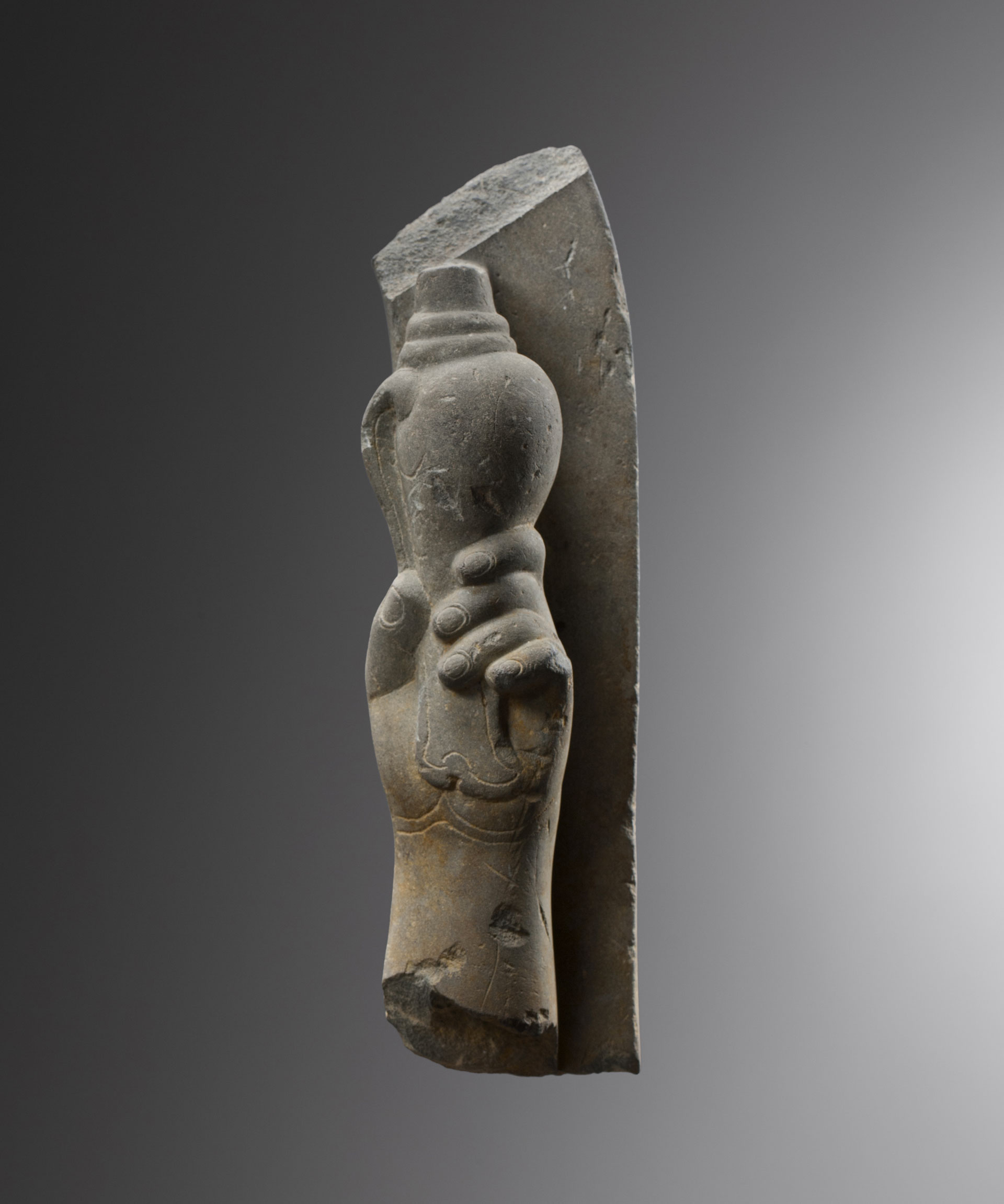
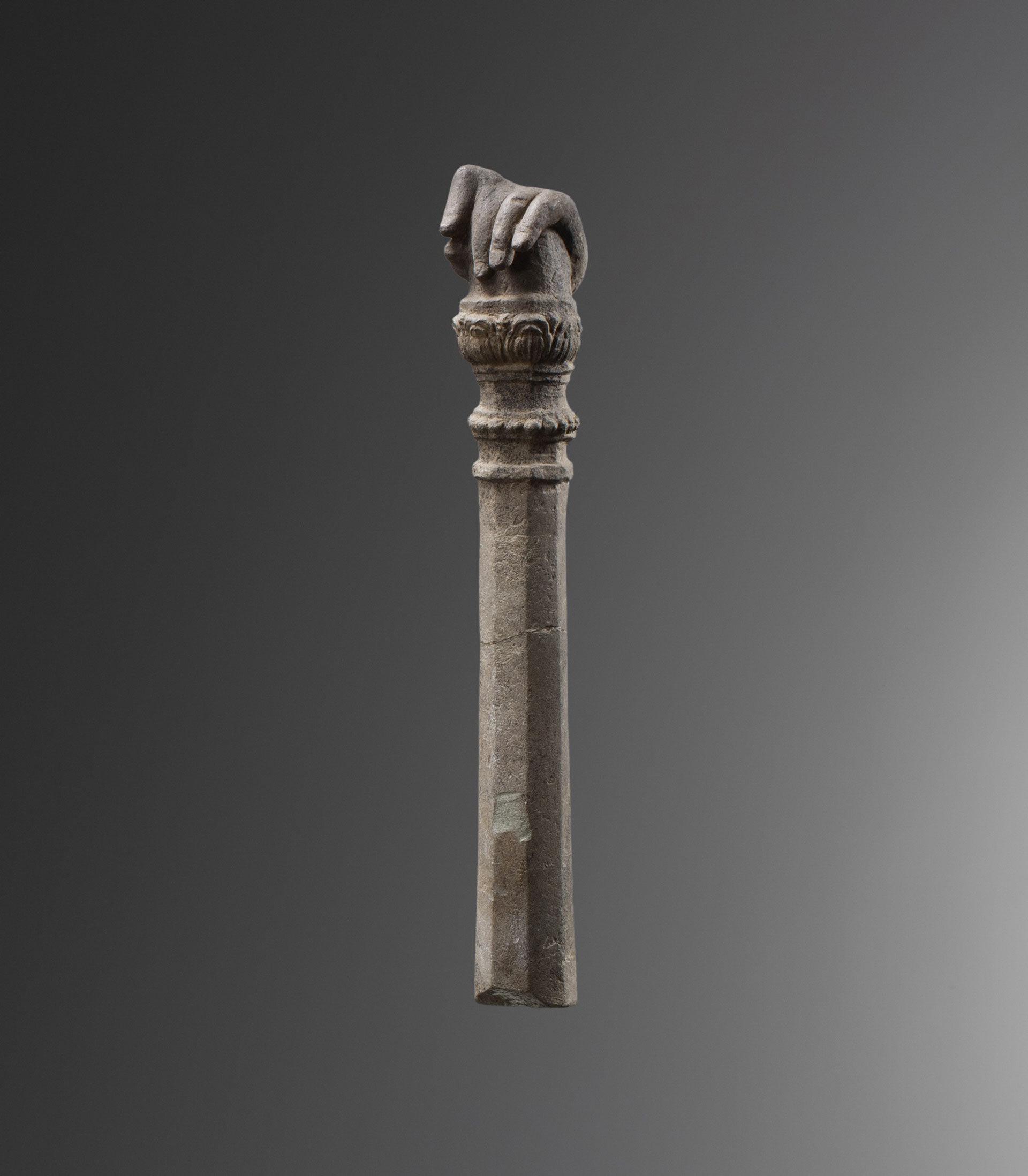
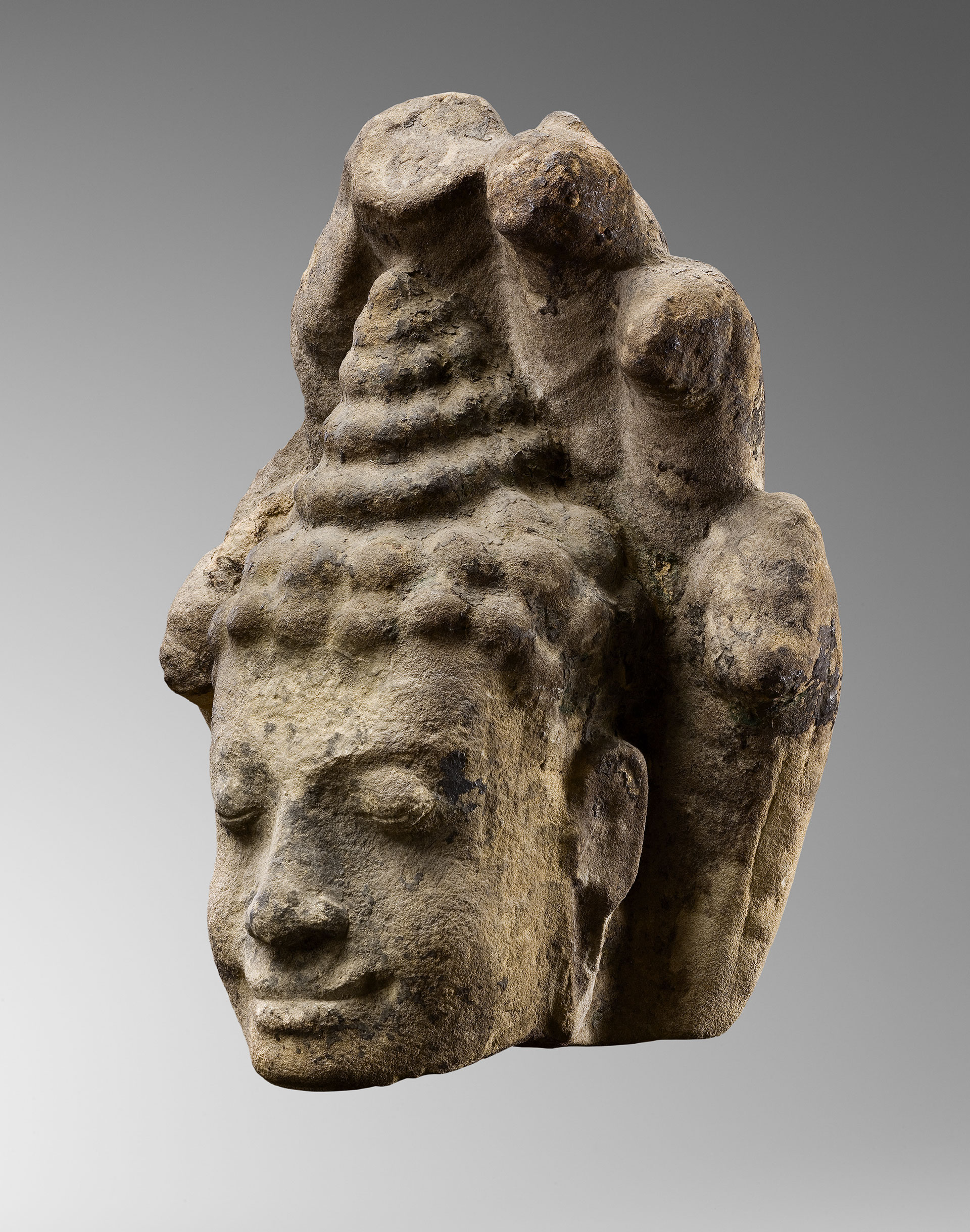
The striated hairstyle curves inward at the temples, while the hair is further adorned with vertical braids descending toward the nape of the neck. A diadem, flaring upward and finely tied at the back, consists of three rows of pearls, floral lozenges, and small vertical leaves. The face is carefully rendered, as is particularly evident in the incision of the eyes, the modelling of the nose, and the treatment of the mouth. The slightly undulating brow arches form an almost sharp continuous line, typical of the 10th century and more specifically of the Bakheng style. This beautiful head, carved from high-quality sandstone, displays an archaizing modelling inherited from 10th-century sculpture. It represents a perfect compromise between the powerful, naturalistic production of the 10th century and that of the 12th century, remarkable for the refinement of its ornament. The head has come down to us together with a hand from the same sculpture holding a mace, an attribute that identifies the deity as Vishnu.